
by Jen Kirkman
Rest can feel confusing, uncomfortable, or even stressful when you're neurodivergent. If you're autistic, have ADHD, or AuDHD, you know that "rest" often feels like just another job.
Why Rest & Relaxation Feels Hard for ADHD/AuDHD Humans
We're told rest should look like taking naps, sitting quietly, turning off screens, or unplugging, but... for those of us with ADHD or AuDHD, rest looks totally different.

We might find it restful to:
Hyperfixate on a special interest
Rewatch the same few episodes of a comfort show
Pace or putter around and listen to music (even the same song over and over)
Organize your piles
Rest Is a Cognitive Necessity

Rest is not just for recovering from being tired. It’s a core part of how your brain handles everything...
When you're constantly "on," your brain doesn't get the downshift time it needs to consolidate memory or make meaning from experiences. Your thoughts get scrambled after a long day of stimulation, and your reactions get snappier.
Rest also plays a role in knowing who you are, especially if you tend to people-please or overperform. If you never stop moving, you never get to notice:
Who am I when I'm not being useful?
Who am I when no one's watching?
These questions surface when you rest because you are finally quiet enough to hear yourself.
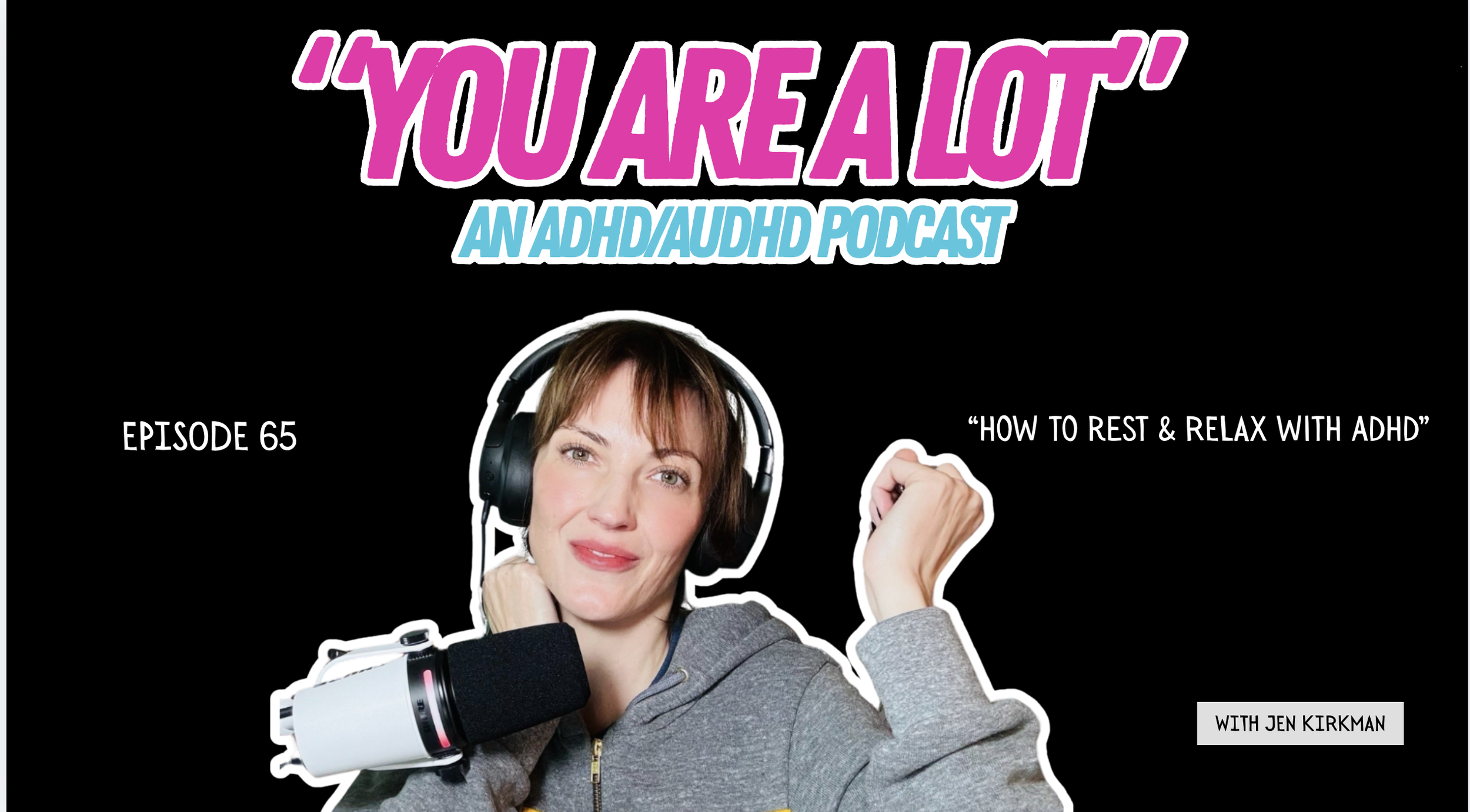
In episode 65 of my podcast “You Are A Lot”, I talk about:
Why rest can feel hard for ADHD/AuDHD humans
The importance of rest
The concept of “micro-breaks” as a way to rest
Try Microbreaks
Micro-breaks or 'mini breaks' are short, intentional pauses, usually under 10 minutes, that let your system reset before you hit depletion. And they don't require silence or sleep. All you have to do is let a microbreak interrupt the cycle of effort with something neutral, grounding, or soothing.
Here are some categorized examples:

Sensory
Lie flat on the floor
Touch a soft texture
Run warm water over your hands
Put on a weighted blanket
Smell something you love
Put on stim music or background sound
Look at one plant or tree for 30 seconds
Cognitive
Rewatch a favorite 1-minute video
Read one paragraph from a comfort book
Write or voice memo a 2-minute brain dump
Write one sentence about how you feel
Do a sorting task (pencils, tabs, notes)
Close your eyes for 90 seconds
Body-Based
Stretch for 30 seconds
Shake out your arms
Walk to another room and back
Do 5 squats or heel raises
Push your hands against a wall
Drink a glass of water slowly
Connection
Sit next to someone in silence
Send a text or write a card to a friend
Ask for a 2-minute hug or hand squeeze
Pet an animal (even a stuffed animal)
In this episode I talk about:
How to know the difference between REST and ISOLATION
How to rest in front of or with other people
How to rest without apologizing or over-explaining your needs
Remember!

Rest doesn’t have to be perfect
Rest doesn’t have to be long
Rest doesn’t have to be still
Related Recommended Reading


